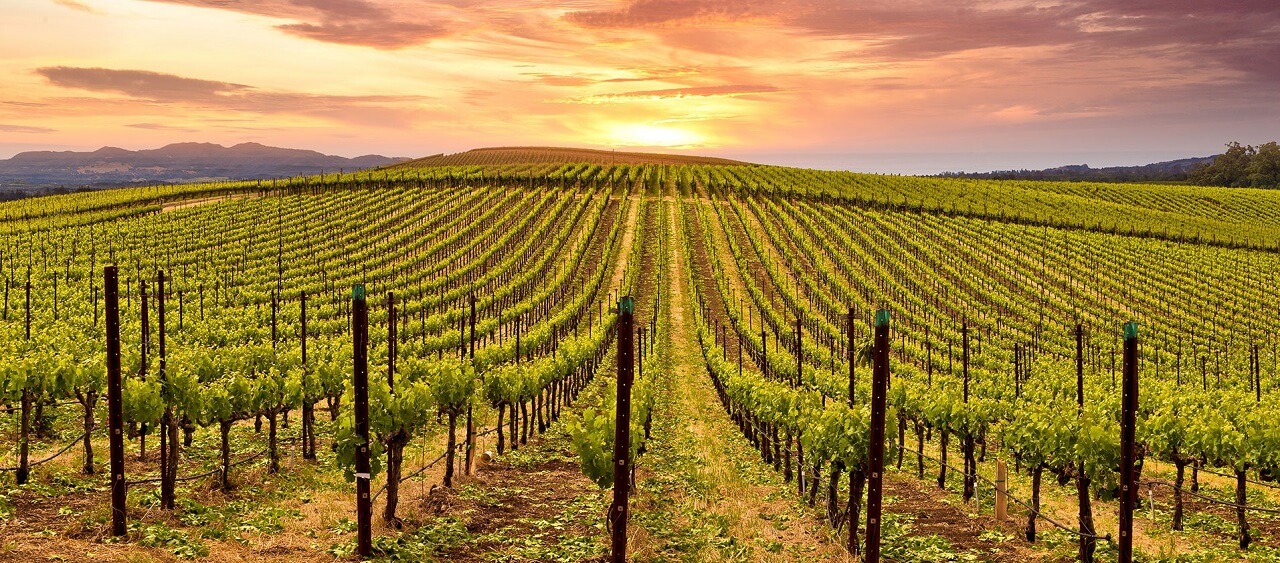
Named after a San Franciscan rancher and gold miner, Amador County in California’s Sierra Foothills, has a rich viticultural history dating back to the gold rush of 1848. Although a wide range of grapes are cultivated here, the region is best known for its intense Zinfandel varietals produced from some of the state’s oldest vines.
Around seventy kilometres southeast of the state capital Sacramento, Amador is amongst California’s smallest counties, both in terms of its area and its population. However, it was once at the bustling centre of the state’s economy with miners, hoteliers and small business owners flocking to the region following the discovery of gold in the middle of the nineteenth century. Amongst them were vast numbers of immigrants from Europe who brought grape growing traditions and winemaking expertise to the west coast of America. In the western foothills of the Sierra Nevada mountains, Amador’s ruggedly picturesque landscape lends itself to the production of high quality wines. Most viticulture takes place in the north of the county where the two sub-appellations of Shenandoah Valley and the curiously named Fiddletown also lie. With elevations between three and six-hundred metres above sea level, a mix of free draining volcanic soils and sandy loam, and excellent UV exposure, this unique terroir has proven itself superb for cultivating the emblematic Zinfandel grape. Warm, sunny days are followed by cool, breezy evenings, and thus grapes develop complex fruit flavours whilst retaining that all important acidity. This balance is reflected in the well-structured, age-worthy wines of the region which can carry either the county label or the wider Sierra Foothills AVA; those produced within one of the sub-AVAs are of course permitted to use the more localised label. Although Zinfandel is the undeniable darling of Amador, other red varieties such as Barbera, Sangiovese, Petite Sirah and Syrah are grown with great success here. The somewhat less prevalent white grapes are led by aromatic Viognier. Today, viticulture still represents half of Amador’s agricultural economy and the area retains its delightful small town charm despite opening up to the benefits of wine tourism. With around one-thousand-five-hundred hectares of planted vineyards, more than forty wineries and an increasing number of Napa and Sonoma giants seeking Amador grapes, this sleepy Californian County is beginning to realise its potential as a serious wine region.