Sub-region
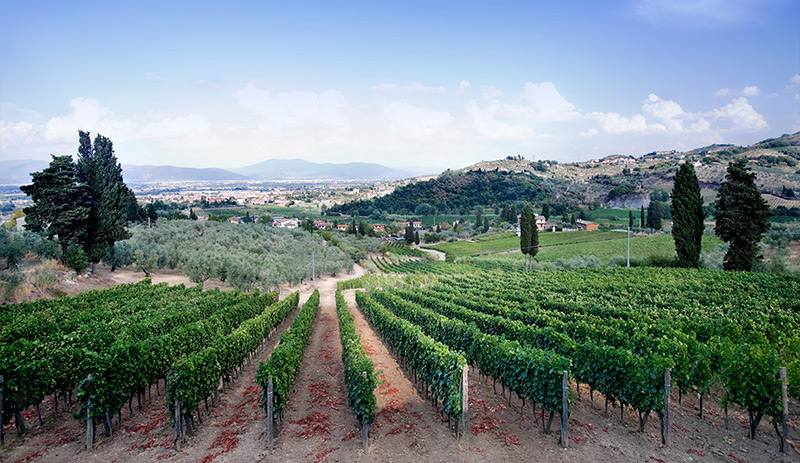
Carmignano is a little known, but quality focussed DOCG in Tuscany. A short drive from Florence, the area covers red wines made from at least 50% Sangiovese. They often blended with Cabernet Franc and / or Cabernet Sauvignon.
7
Despite being one of Tuscany's smallest, and most recently created red DOCGs, Carmignano could well be the region's next big thing. It covers a small growing area of less than 100 hectares, overlapping both the provinces of Pato to the west and Florence to the west. Carmignano has always been sources of exceptional quality fruit and in the 18th century, the Grand Duke Cosimo III based his nurseries here. Among the early imported grapes was Cabernet Sauvignon. As demand for Chianti grew throughout the 1970s and 1980s, Carmignano lost its way a little with much of the production lost in large quantities of Chianti Montalbano. In reality the area is suited to Cabernet Sauvignon and today Cabernet Sauvignon makes up and important part of wine's identity. Dario and Enrico Pierazzuoli are the pioneers of the denomination.
Carmignano is one of the most historical wines in Italy. Wine production here dates back to the Romans, possibly even the Etruscans. Its territory was first demarcated and protected in law in 1716 by the Grand Duke of Tuscany, Cosimo III de' Medici. For a long time, the wines were grouped with the Montalbano area of Chianti, but the wines were often different, in part due to the presence of Cabernet Sauvignon in the blend. It is believed that presence of Cabernet here goes back a few centuries, but the vines were largely wiped out by phylloxera. The use of Cabernet gathered pace again after the WW2 and in 1975, Carmignano became the first DOC in Italy to officially permit its use. Carmignano was granted DOCG in 1990, which could be applied to wines from the 1988 vintage onwards.
