Appellation
Coombsville AVA is Napa Valley’s southernmost subregion, known for cool-climate expressions of Cabernet Sauvignon, Merlot, and Chardonnay. Sheltered by hills and cooled by marine fog, it yields wines of freshness, structure, and subtle power. Though officially recognised in 2011, Coombsville has a long viticultural history and is increasingly celebrated for its age-worthy, finely balanced reds.
1
Located in the southeastern corner of Napa Valley near the town of Napa itself, Coombsville AVA is one of the most distinctive subregions in the county. Despite being Napa’s second-youngest AVA, established in 2011, it is home to some of the oldest continuously farmed vineyards in the region. The area is defined by its bowl-shaped topography, proximity to San Pablo Bay, and volcanic soils with significant ash and tuff deposits.
Coombsville’s cooler climate sets it apart from many of Napa’s warmer northern AVAs. The morning fog and slower ripening conditions contribute to a unique style of Cabernet Sauvignon, more restrained, aromatic, and age-worthy than the plusher styles found in Rutherford or Oakville. As climate change shifts growing conditions throughout Napa, Coombsville’s ability to maintain freshness and phenolic balance has only grown in importance.
Viticulture in Coombsville dates back to the 19th century, with the area originally known as “Coombs Valley” after Nathan Coombs, one of Napa’s founding settlers. The region’s early focus was on mixed agriculture and cattle grazing, but by the mid-20th century, vineyards began to take root in earnest.
Though it remained outside the limelight for decades, Coombsville quietly supplied fruit to top Napa wineries throughout the 1980s and 1990s. Its cooler climate was initially viewed with scepticism, but as winemakers began to seek balance and elegance, Coombsville's reputation grew. The AVA was officially designated in 2011, recognising both its unique geology and its consistent record of producing high-quality fruit.
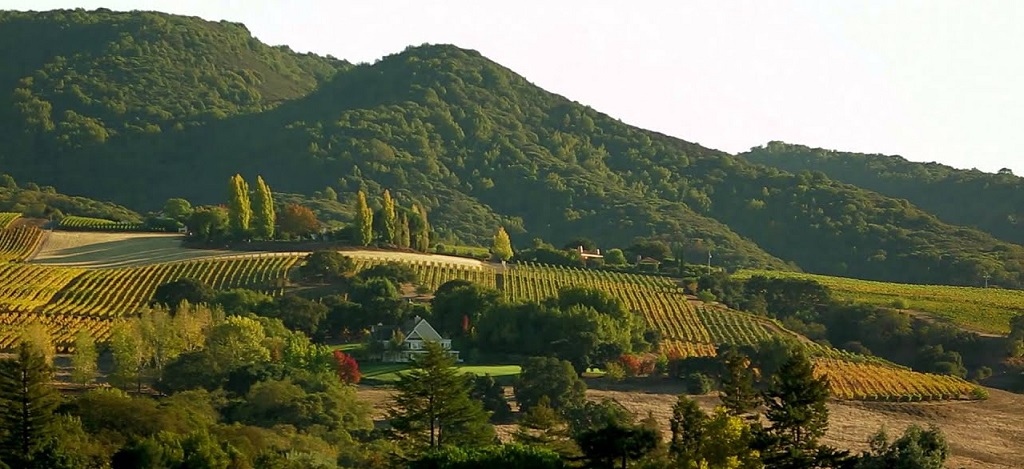
Coombsville’s defining terroir includes its volcanic soils, shaped by eruptions from nearby Mount George. These soils are layered with ash, tuff, basalt, and loam, offering excellent drainage and moderate fertility. The region's topography forms a natural amphitheatre that traps cool air and fog from San Pablo Bay, extending the growing season.
Average vineyard elevations range from 100 to 1,000 feet. The mornings are often foggy, with warm days and cool evenings that slow down ripening and preserve acidity. This cooler mesoclimate results in wines with lifted aromatics, firm structure, and greater nuance—particularly important for producers seeking freshness and balance over concentration and ripeness.
Coombsville Cabernet Sauvignon stands out for its structure, aromatic complexity, and age-worthiness. These wines typically show blackcurrant, graphite, crushed herbs, and floral notes, with firm tannins and a fresh acid backbone. Compared to other Napa Cabernets, they are less opulent and more restrained, with a slow-developing profile that rewards cellaring.
Merlot, Syrah, and Bordeaux-style blends also do well here, showing deep colour, spice, and savoury undertones. Chardonnay from Coombsville often balances citrus and stone fruit with saline minerality, while Sauvignon Blanc tends to express more herbal and flinty characteristics than in warmer AVAs. Across all styles, the wines reflect their cool-climate origins with poise and clarity rather than richness alone.
Cabernet Sauvignon is the defining grape of Coombsville, often producing wines with lower alcohol, vibrant acidity, and firmer tannins compared to other parts of Napa Valley. The cooler conditions preserve varietal expression and allow for longer hang times without excessive sugar accumulation. Many single-vineyard and estate bottlings now carry the Coombsville name.
Merlot thrives in the area’s volcanic soils, offering plush fruit and spice balanced by freshness. Syrah can be exceptional here, combining ripeness with savoury complexity. Among white grapes, Chardonnay and Sauvignon Blanc stand out, with some producers crafting textured, barrel-fermented expressions while others aim for purity and precision. Small plantings of Pinot Noir exist but are rare and site-dependent.
Coombsville AVA is a federally designated American Viticultural Area within the larger Napa Valley AVA. Like other American AVAs, it does not impose specific varietal, production, or stylistic requirements. Instead, it provides a geographic framework that reflects shared climate, soil, and topographic conditions.
All wines bearing the Coombsville AVA label must be made from at least 85% grapes grown within the AVA’s boundaries. It encompasses just over 11,000 acres, with approximately 1,400 acres planted to vines. While Cabernet Sauvignon is the most widely planted variety, the AVA also includes significant acreage of Merlot, Syrah, Pinot Noir, and white varieties such as Chardonnay and Sauvignon Blanc.
As part of the U.S. AVA system, Coombsville AVA follows standard federal labelling rules. Wines bearing the AVA designation must be made from at least 85% fruit grown within the defined boundaries and must be vinified and bottled according to TTB regulations. There are no additional local yield, varietal, or vinification restrictions.
However, many Coombsville producers voluntarily adopt low-intervention practices, such as organic or sustainable farming, low yields, and precision viticulture. These decisions are driven more by quality goals than regulatory requirements. The absence of prescriptive rules allows for stylistic diversity, but a shared commitment to freshness and site transparency gives Coombsville wines a recognisable identity.
Coombsville has emerged as a hotspot for winemakers seeking elegance, structure, and site-driven character in Napa Cabernet. Rising land prices in central Napa have driven investment toward Coombsville, where the cooler climate is also seen as an asset in the face of warming trends.
Producers are embracing lower alcohol, native yeast fermentation, and restrained oak use to emphasise purity and ageability. Vineyard mapping and clonal research are improving site expression, while a growing number of small estates and micro-negociants are bottling Coombsville-designated wines. The AVA’s cool-climate signature is no longer seen as a limitation, but a strength—especially among collectors and sommeliers seeking freshness over flash.
Andy Erickson, former Screaming Eagle winemaker, has been instrumental in raising Coombsville’s profile through his Favia project, which produces finely tuned Cabernet blends with precision and restraint. Paul Hobbs has invested in the AVA through Nathan Coombs Estate, crafting age-worthy, structured wines that highlight the region’s volcanic soils.
Meteor Vineyard is another benchmark estate, known for its single-vineyard Coombsville Cabernet. Other notable producers include Faust, Regusci’s Tether, Caldwell Vineyard, and Marita’s Vineyard, each offering distinctive expressions of the AVA. Many Napa Valley icons, including Realm, Far Niente, and Joseph Phelps, source fruit from Coombsville, a quiet sign of its rising prestige.
For a classic Coombsville Cabernet, try Favia Cabernet Sauvignon Coombsville or Meteor Vineyard Perseid, both showing structure, elegance, and long-term ageing potential. Paul Hobbs Nathan Coombs Estate offers density with poise, while Faust “The Pact” reveals the AVA’s darker, more mineral edge. For whites, seek out Coho’s Coombsville Chardonnay or Porter Family Vineyards’ Sauvignon Blanc, both showing vibrancy and texture. Caldwell Syrah is a compelling alternative to Rhône-style reds, combining ripeness with savoury complexity.
