Appellation
Rockpile is an American Viticultural Area in the north of Sonoma County, close to its border with Mendocino. Best known for its Zinfandel varietals, the area benefits from a terroir which is utterly distinct from its neighbours and hence, the wines of this region are quite unlike those grown elsewhere in the county.
3
3
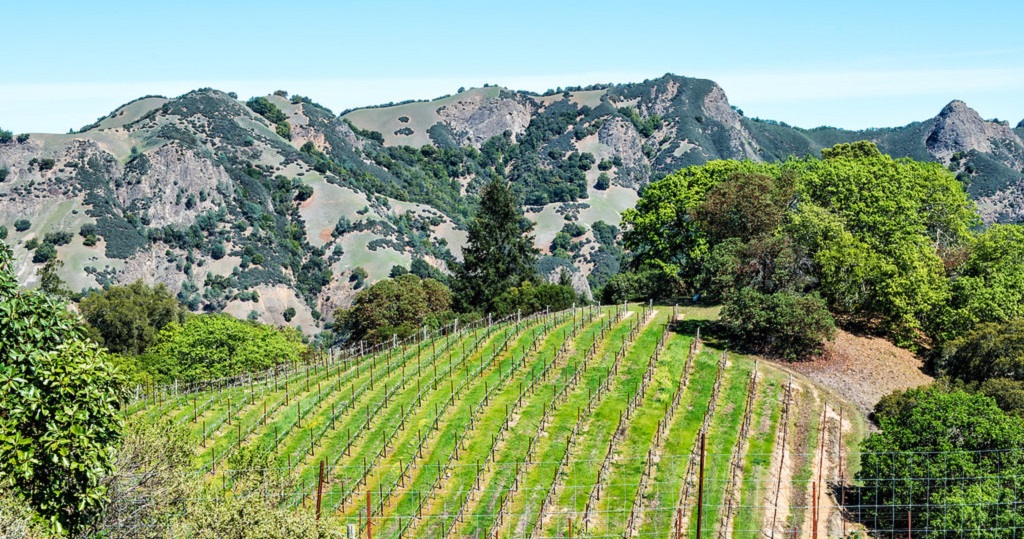
Covering a geographic area of around six-thousand hectares, but with only a minuscule fraction under vine, Rockpile AVA overlaps the larger Dry Creek Valley at its north west corner, with a section of land - around one-thousand hectares - falling under the umbrella of both appellations. In terms of its planted area of less than one-hundred hectares, Rockpile is amongst the smallest AVAs in California and the entire United States. However, what it lacks in size, in makes up for in quality, with a unique geology and microclimate described by critics and viticultural experts as one of the finest sites on the North Coast for cultivating the Zinfandel grape. Elevation is key here. Almost all of the vineyards in Rockpile occupy plots above three-hundred metres, and AVA regulations state that grapes must come from sites at least eight-hundred feet (two-hundred-and-forty-four metres) above sea level in order to qualify for the label. This altitude, along with the somewhat inhospitable, rugged terrain suggested by the appellation’s name, and the influence of the Pacific Ocean and nearby Lake Sonoma, co-create a series of climatic conditions unique to these parts. Moderated temperatures, strong winds coming off the ocean and an absence of the fog so often associated with North Coast AVAs, affords Rockpile’s grapes a reliably long and steady growing season. Typically, they enjoy excellent exposure to sunshine with either a southwestern or a northeastern aspect, enabling the delivery two distinctly different wines from the same grape variety. The combination of shallow soils, steep slopes and a lack of moisture is conducive to low yields of high quality fruit. Established as an AVA in 2002, Rockpile is creating a name for itself on the Californian wine scene. In addition to the intense, complex and flavoursome Zinfandel wines most synonymous with the AVA, other varieties such as Syrah, Petite Sirah and Cabernet Sauvignon have also found success here on a small scale. Given the tiny size of the area under vine and the subsequently limited supply, Rockpile’s signature wines are difficult to obtain with most bottles snapped up by enthusiasts on release.
The Rockville AVA was officially established in 2023, making it one of California’s newest appellations. Situated in Solano County between Napa Valley and Suisun Valley, the AVA’s identity has long been overshadowed by its prestigious neighbours. However, winegrowing here dates back to the late 1800s. The push for AVA recognition was led by a small group of local growers aiming to distinguish their wines and terroir from nearby appellations. The name “Rockville” derives from a small hamlet that once served as a vital waypoint during California’s early settlement.
Rockville AVA sits at the southern end of the Vaca Mountains’ foothills. The climate is moderated by marine influences from nearby San Pablo Bay, leading to cooler mornings and steady afternoon breezes. Soils are predominantly alluvial, with gravel and clay components that offer good drainage and moderate vigour. The western side sees more wind influence and slightly cooler temperatures, while the eastern areas are warmer and drier, encouraging full phenolic ripeness.
Cabernet Sauvignon dominates the planted area, benefiting from the warm climate and gravelly soils that help produce structured wines with dark fruit character. Other Bordeaux varieties, such as Merlot and Cabernet Franc, are also planted, along with Chardonnay and Sauvignon Blanc, which are grown in slightly cooler pockets of the AVA. Zinfandel and Petite Sirah, once more prominent in the region, are now rarely seen.
Rockville AVA has attracted the attention of Napa-based producers looking for high-quality fruit at a lower cost. As land prices in Napa have soared, Rockville is becoming a strategic area for sourcing grapes. A handful of independent wineries have started estate bottling, aiming to build a premium identity for Rockville wines. Sustainability practices, including organic farming and cover cropping, are increasingly being adopted.

