Sub-region
Ruché di Castagnole Monferrato DOCG is a small but distinctive appellation in Piedmont dedicated to the rare Ruché grape. Known for its floral aromatics, red berry fruit, and gentle structure, Ruché produces wines that are expressive, unique, and often polarising. Its limited production and strong local identity have made it a cult favourite among Italian wine enthusiasts.
1
12
Ruché di Castagnole Monferrato DOCG is a small, aromatic red wine zone in the hills of northern Monferrato, in Piedmont’s Asti province. It focuses exclusively on Ruché, a little-known indigenous variety with intensely floral aromatics and a light-to-medium body. The wines are unmistakably perfumed, often recalling rose petals, wild berries, and sweet herbs, with soft tannins and a dry finish. The DOCG is named after the commune of Castagnole Monferrato, the heartland of Ruché production, and includes six other surrounding villages. With fewer than 200 hectares under vine, it is one of Italy’s smallest denominations. Yet its unique style, singular grape, and strong local commitment to quality have brought it increasing attention in recent years.
The origins of Ruché are obscure, with competing theories suggesting either local Piedmontese or French roots. It was long cultivated in the hills around Castagnole Monferrato for family use or religious ceremonies. By the mid-20th century, it was nearly extinct, grown by just a few local farmers. The revival of Ruché is largely credited to Don Giacomo Cauda, a parish priest in Castagnole who, in the 1970s, began bottling the wine commercially and promoting it in the region. His efforts sparked renewed interest, and over the following decades, more growers replanted the variety. The appellation was granted DOC status in 1987 and elevated to DOCG in 2010, recognising the distinctiveness and quality of this rare grape.
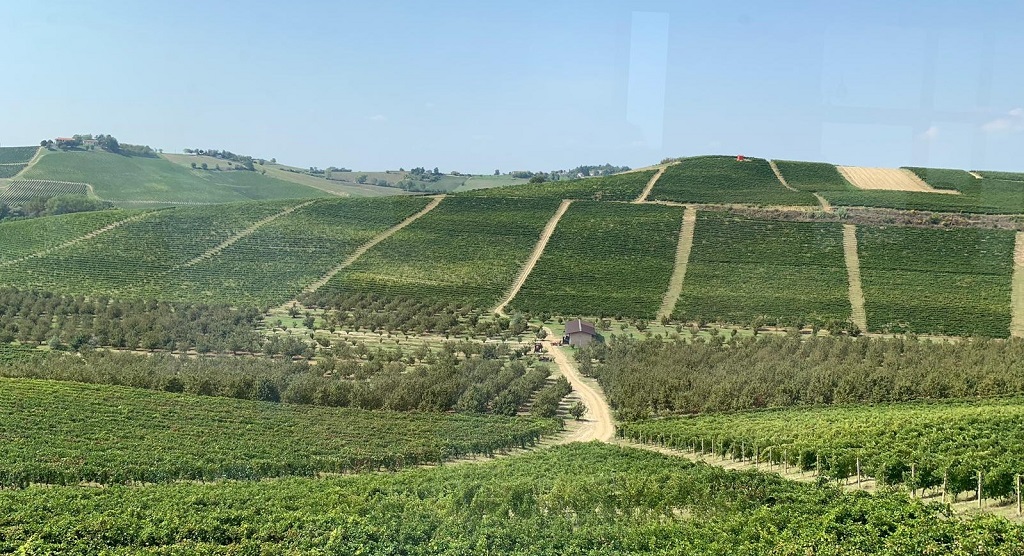
The Ruché zone lies in the rolling hills northeast of Asti, with vineyard elevations ranging from 200 to 400 metres. Soils are primarily sandy marl and calcareous clay, with good drainage and moderate fertility. These conditions help preserve aromatics and encourage slow, even ripening. The climate is continental with warm summers and cold winters, moderated by occasional breezes from the nearby Po Valley. While the growing season can be hot, especially in recent years, Ruché retains its floral lift thanks to careful canopy management and altitude. The terroir contributes to wines that are perfumed yet dry, structured yet light on their feet.
The sole grape of the appellation is Ruché, an aromatic red variety that thrives in the sandy, calcareous soils of Castagnole Monferrato and its surrounding communes. It is late-ripening and moderately vigorous, with thin skins and low phenolic content, contributing to its lighter colour and soft tannins. Its defining trait is its heady aromatics, which are often compared to Brachetto or even Gewürztraminer, but expressed in a dry red context. The grape’s natural perfume and medium structure make it both versatile and polarising, loved by some for its distinctiveness, but sometimes misunderstood by those expecting more tannin or density from a Piedmontese red.
To be labelled Ruché di Castagnole Monferrato DOCG, wines must contain at least 90% Ruché, with up to 10% Barbera or Brachetto allowed. Yields are limited to 9 tonnes per hectare, and wines must be vinified and bottled within the designated zone. Minimum alcohol is 12.5% for standard Ruché and 13% for Riserva. Riserva wines must be aged at least 24 months, with no specific oak requirement. Personally, I'm not a huge fan. I find youthful versions very enjoyable, and don't see the need to pitch these wines as wines of longevity, especially considering Piedmont's abundance of age worthy varieties. “Vigna” labels must indicate a registered vineyard and meet stricter controls on yield and traceability. Only still, dry red wines are permitted. No sparkling, sweet, or rosé styles fall under the DOCG.
Ruché is increasingly being positioned as a distinctive, modern face of Piedmont, especially appealing to consumers looking for lighter-bodied reds with aromatic character. Younger winemakers are experimenting with whole-cluster fermentation, native yeasts, and neutral ageing vessels to preserve the grape’s floral delicacy. Some are exploring amphora or cement to avoid oak influence altogether. There’s also growing interest in terroir expression, with several producers bottling single-vineyard cuvées to highlight microclimates and soil types. As climate change affects ripening and alcohol levels, producers are adjusting canopy management and harvest dates to retain balance. Export markets, especially in the US and Japan, are responding well to Ruché’s perfume and originality, though production remains limited.
Montalbera is the largest estate in the appellation, and owns 60% of vineyards in the DOCG. As such, this is inevitably the most important reference, and given their work across many international markets, the most accessible. Luca Ferraris of Ferraris Agricola is one of the leading figures in the appellation, producing several expressions of Ruché, including single-vineyard and riserva bottlings. Nadia Verrua of Cascina Tavijn, a smaller, natural-leaning estate, produces raw, expressive versions that appeal to minimal-intervention fans.

