Sub-region
Santorini PDO produces intensely mineral, high-acid white wines from the Assyrtiko grape, grown on ancient volcanic soils under extreme climatic conditions. Known for their saline grip and ageing potential, these wines reflect a singular island terroir shaped by sun, wind, and ash. The PDO also permits rare sweet vinsanto wines made from sun-dried grapes.
14
Argyros Estate · 2020

Domaine Sigalas · 2022
Argyros Estate · 2023
Domaine Sigalas · 2024
7
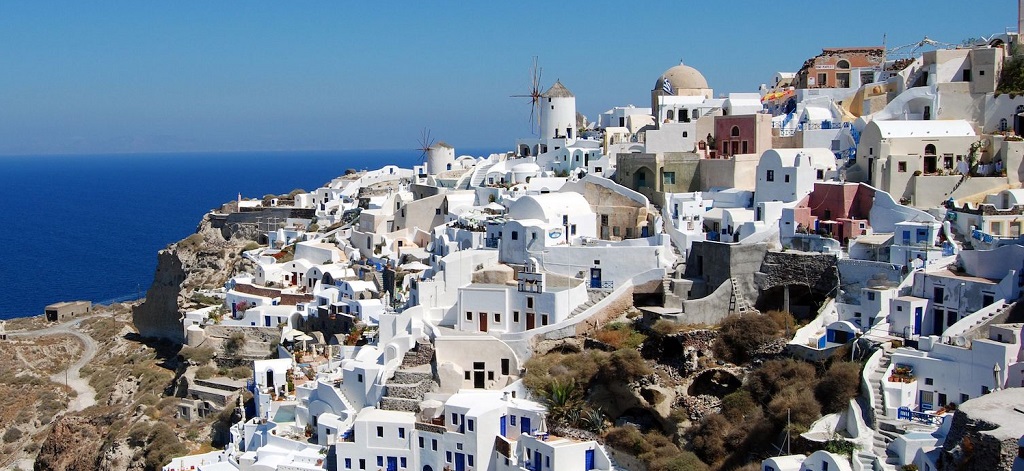
The Santorini PDO encompasses the entirety of the volcanic island of Santorini, part of the Cyclades in the South Aegean Sea. Famed for its arid climate, constant winds, and stark, caldera-formed landscape, Santorini is one of the most distinctive viticultural zones in the world. The appellation is synonymous with Assyrtiko, a white grape variety that thrives in the island’s harsh, mineral-laden conditions. Wines labelled Santorini PDO must be dry whites made from at least 75% Assyrtiko, often blended with Athiri or Aidani. The region is also authorised to produce sweet vinsanto wines from sun-dried grapes. With its phylloxera-free, own-rooted vines, some of the oldest in Europe, Santorini combines ancient traditions with modern acclaim, offering wines of precision, salinity, and structure.
Santorini’s winemaking history spans over 3,500 years, dating back to Minoan times before the island’s catastrophic volcanic eruption around 1600 BCE. Archaeological sites at Akrotiri suggest early viticulture and wine storage. Following the eruption, volcanic soils shaped a new agricultural reality, favouring drought-resistant crops and grapes, particularly Assyrtiko.
During Venetian rule from the 13th to 16th centuries, Santorini’s wines were prized across Europe, especially the sweet, fortified-like vinsanto exported to Russia and the Vatican. The island retained its vine culture through Ottoman times and Greek independence, largely due to its infertile, rocky soils being unsuitable for other crops. In 1971, the island’s unique wine heritage was formally recognised with the establishment of the Santorini PDO.
Santorini’s terroir is shaped by its volcanic origin, with soils composed of pumice, lava, ash, and sand, entirely free of clay. These porous, mineral-rich soils retain little organic matter and virtually no water, forcing vines to send roots deep into the earth. The lack of clay also means that phylloxera has never taken hold, allowing vines to remain own-rooted for centuries.
The island’s hot, dry, and windy climate is moderated by proximity to the sea and a regular northerly wind called the meltemi. Rainfall is extremely scarce, so vines absorb moisture from humidity and sea breezes. Vines are trained in kouloura, a low basket shape that shields grapes from wind and sun while preserving moisture. These growing conditions result in low yields and highly concentrated fruit.
Dry Santorini Assyrtiko is known for its bone-dry profile, laser-sharp acidity, and marked salinity. Aromas typically include lemon zest, grapefruit, white flowers, and crushed shells, with a palate that is textured, tense, and long. The best wines develop complexity over time, gaining notes of honey, roasted nuts, and flint with bottle age.
Vinsanto wines are deep amber to mahogany in colour, with rich flavours of dried apricot, fig, caramel, and orange peel. Despite their sweetness, they maintain vibrant acidity thanks to the Assyrtiko base, resulting in a long, balanced finish. These wines are typically oxidative in character due to extended barrel ageing and can age for decades. While made in small quantities, they remain central to Santorini’s identity.
Assyrtiko is the dominant grape of Santorini and forms the backbone of both dry and sweet PDO wines. It is drought-tolerant, naturally high in acid, and uniquely capable of expressing the island’s stony terroir. Assyrtiko here differs markedly from mainland versions—more concentrated, more mineral, and often more age-worthy.
Aidani is used for its floral aromatics and softer acidity, especially in vinsanto blends. Athiri is another authorised white variety that adds volume and freshness but is rarely used in high percentages. Red grapes like Mandilaria and Mavrotragano are important locally but fall outside the PDO, instead bottled under Cyclades PGI.
The Santorini PDO includes two primary styles: dry white wines and sweet vinsanto wines. The dry wines must contain a minimum of 75% Assyrtiko, with Athiri and Aidani allowed in supporting roles. Many producers choose to use 100% Assyrtiko to emphasise the variety’s intense minerality and ageing capacity.
Vinsanto wines are made from at least 51% sun-dried Assyrtiko, with Aidani commonly used to balance acidity and aromatics. These wines must be aged for a minimum of 24 months in oak, though many producers age them much longer. Fortified wines, labelled as liastos or liquoroso, are no longer authorised under the PDO. Sparkling wines and red wines from Mandilaria and Mavrotragano are made under regional PGI designations, not within the PDO.
To carry the Santorini PDO label, dry wines must contain at least 75% Assyrtiko, with the remainder limited to Athiri and Aidani. The wines must be dry in style, with a minimum alcohol level of 13%. No chaptalisation or acidification is permitted. Wines may be labelled Nykteri if harvested at night and aged in oak for at least three months, traditionally indicating richer, barrel-aged expressions.
Vinsanto PDO must be made from sun-dried grapes, dried for a minimum of 12 days, with at least 51% Assyrtiko. Ageing must be in wood for at least two years, though some producers extend this to ten years or more. The use of additives, fortification, or spirit is not permitted. All PDO wines must be produced, vinified, and bottled on the island.
Santorini’s wines have gained international acclaim for their purity, structure, and volcanic identity, with Assyrtiko now planted across Greece and exported widely. Despite this growth, Santorini’s production remains small, and land for vineyards is under pressure from tourism and development. Older vines and low yields further limit supply, keeping the wines relatively scarce.
Producers are increasingly experimenting with single-vineyard bottlings, extended lees ageing, and concrete or amphora fermentations to highlight site-specific expressions. Some are reviving Nykteri and old-school vinsanto traditions with extended oak ageing and minimal intervention. Organic practices are growing, though the island’s fragile climate and terrain pose challenges. Across the board, the emphasis remains on expressing Santorini’s unique geological and climatic character.
Haridimos Hatzidakis, founder of Hatzidakis Winery, played a visionary role in re-establishing natural winemaking and preserving Santorini’s old vines, especially Argyros and Assyrtiko. His wines, often made with minimal intervention and native yeast, helped redefine the potential of Santorini’s whites before his untimely death in 2017.
Paris Sigalas, founder of Domaine Sigalas, brought international attention to Santorini through site-driven, precise Assyrtiko wines. His commitment to single-vineyard expressions helped elevate the island’s reputation. Other leading names include Estate Argyros, known for its extensive holdings of ungrafted vines; Gaia Wines, pioneering Assyrtiko vinified in amphora; and Vassaltis Vineyards, a modern project focused on elegance and terroir purity.
Most Santorini wines are excellent. I enjoy Assyrtiko produced by Domaine Sigalas, notably the single vineyard Kavalieros. I'd highly recommend Estate Argyros' Cuvee Monsignori and Cuvee Palatia, both made from old vines and both full of mineral tension. Hatzidakis “de Mylos” Nykteri offers a richer, oak-aged style. Among sweet wines, Estate Argyros Vinsanto 20 Years is a reference point, combining dried fruit, acidity, and oxidative depth. Gavalas Vinsanto and Venetsanos also offer high-quality versions. These wines exemplify the island’s unique ability to produce both crystalline dry whites and haunting, age-worthy dessert wines from a terroir unlike any other.
