About
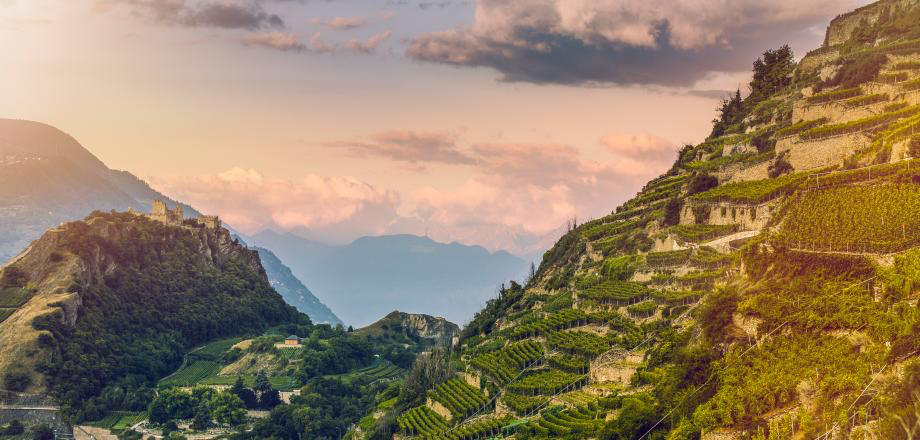
Switzerland - a country of startling contrasts and consummate surprises. Tradition and progress, rural tranquility and alpine adventure, awe-inspiring natural beauty and uber-cool urban edge. Home to 8 million people, 4 official languages and more Michelin starred restaurants per capita than anywhere else on earth. A nation synonymous with affluence and precision. Renowned for its luxury watch brands and master chocolatiers, for its majestic mountain scenery and unwavering neutrality, for its humanitarianism and the resolute strength of its currency... But, for its wine? It is true to say that Swiss wine remains something of an enigma even to those within the industry. The history books tell us that viticulture has been alive and well in this landlocked alpine paradise for centuries, but perhaps owing to the small volume of production, or simply because the Swiss have wanted to keep their crop for themselves, little has become known outside of the country about its cultivation, variety and uniqueness. Even now, only a tiny fraction of the annual yield is consumed beyond the national boundary. And so one might be surprised to learn that more than 200 grape varieties are produced in an area of 15,000 hectares, across 20 of the country’s 26 cantons. Red varieties are favoured over white, both in terms of production and consumption (the Swiss are, perhaps surprisingly, amongst the world’s most prolific wine drinkers), with Pinot Noir and Chasselas the leading grapes of their type. Canton Valais - home to the Matterhorn - is Switzerland’s largest wine producing region. Its diverse topography and resulting microclimates call for a vast number of varieties to grow on the sunshine-rich south facing slopes of the upper Rhone valley, where the vineyards are owned and tended by a wealth of independent vignerons. Production in the country’s second largest region - Vaud, on the northern shore of Lake Geneva, is dominated by the Chasselas grape which accounts for 70% of the canton’s yield, and the third largest area - around the city of Geneva itself, offers beautiful Gamays and unusual white varieties. These three regions together represent three quarters of Switzerland’s annual wine production, yet there are other, smaller regions to note as well, including Canton Ticino in the south and the German speaking regions of Eastern Switzerland where reds such as Pinot Noir (Blauburgunder) make up 80% of production. So despite the country’s size, the tiny volume of wine it produces by comparison with its geographical neighbours and its not being widely recognised internationally as a wine producing country, Switzerland is undoubtedly starting to emerge as a serious wine nation. In a land where cured meats and fondue form the staple diet, it hardly seems a giant leap of faith to presume that the wine they produce to pair with their cheese and charcuterie, might just be a match for its quality…