
Borgogno
Piedmont
Borgogno is one of Piedmont’s historic wineries, based in the village of Barolo and known for traditional expressions of Nebbiolo. Alongside key holdings in prestigious Barolo crus, the estate also cultivates Barbera, Riesling, and Timorasso, offering a broad, terroir-driven portfolio rooted in classical winemaking.
01
Wines
- Barbera d’Alba DOC Superiore
Red · 2018
- Langhe DOC Riesling "Era Ora"
White · 2020
- Barolo DOCG Fossati
Red · 2016
- Barbera d’Alba DOC
Red · 2019
- Dolcetto d’Alba DOC
Red · 2020
- Langhe DOC Freisa
Red · 2019
- Barolo DOCG Liste
Red · 2016
- Langhe DOC Nascetta
White · 2019
- Barolo DOCG Cannubi
Red · 2013
- Colli Tortonesi DOC Timorasso "Derthona"
White · 2021

- Barolo DOCG Riserva
Red · 2011
- Barolo DOCG
Red · 2015
02
Ownership & People
Borgogno was purchased in 2008 by Oscar Farinetti, founder of the Eataly food emporium. The estate is currently run by his son Andrea Farinetti, who has led the transition to organic certification and reasserted the winery's focus on traditional Barolo production. The Farinetti family has invested heavily in restoring historic vineyards and expanding Borgogno’s reach, positioning it as a standard bearer for Piedmontese authenticity.
03
History
Established in 1761, Borgogno played a central role in the early development of Barolo as a recognised wine of prestige. The winery’s wines were famously served at the unification of Italy in 1861. For most of the 20th century, it remained in family hands and was known for its long-aged, old-style Barolo. The acquisition by Oscar Farinetti in 2008 marked a new chapter, balancing the estate’s deep roots with a more outward-looking commercial approach. Historic vintages are still held in the cellar as part of the winery's museum collection and identity.
04
Location
Borgogno’s winery is located in the heart of the Barolo village, with vineyard holdings across several cru zones in the Barolo DOCG and additional land in Madonna di Como near Alba. This strategic positioning gives the estate access to both classic hillside terroirs and cooler, higher-elevation sites suitable for Barbera, Riesling, and Timorasso.
05
Vineyards & Viticulture
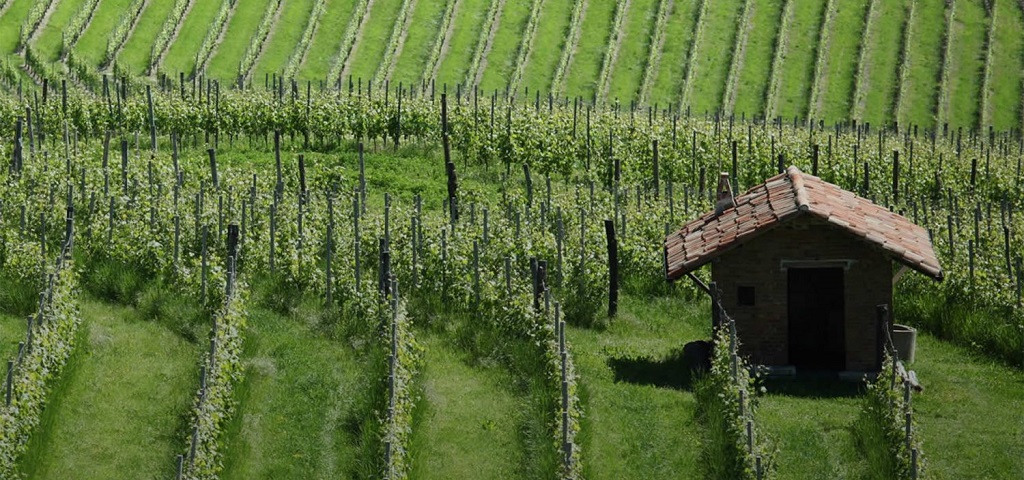
The estate owns 11 hectares in Madonna di Como, including Bricco Bompè, a prized site planted to Barbera and Riesling. For Barolo, the estate farms cru parcels across 15+ hectares: a 6.75-hectare block in Liste (southern exposure, 270–330m altitude), 1.3 hectares in Cannubi and Cannubi San Lorenzo, 3.2 hectares in Fossati with sandy soils, and 4 hectares in San Pietro delle Viole, known for its elegance and floral expression. Additionally, Borgogno owns Vigna Scaldapulce, a site straddling multiple regional borders, where compact clay and blue marl support a small but significant planting of Timorasso. All vineyards are farmed organically.
06
Winemaking
Borgogno adheres to traditional winemaking techniques: spontaneous fermentation with native yeasts, long macerations (often over 30 days), and ageing in large Slavonian oak casks. This approach is designed to preserve the identity of site and grape, especially for Barolo. Wines are aged extensively before release. Recent vintages have shown a renewed focus on precision and balance, with minimal intervention in the cellar but greater selectivity in both vineyard and harvest.
07
The Wines
Barolo remains the core of Borgogno’s identity, with standout single-vineyard expressions from Liste, Cannubi, Fossati, and San Pietro delle Viole, each showcasing different facets of Nebbiolo. The ‘No Name’ Barolo, an unofficial bottling created in response to DOC bureaucracies, has developed a cult following. Outside Barolo, the Barbera and Riesling from Bricco Bompè show freshness and clarity, while Timorasso from Vigna Scaldapulce offers an emerging, terroir-specific white with real structure and ageing potential.
08
Visiting
Borgogno welcomes visitors at its historic winery in the centre of Barolo, where guests can tour the traditional cellars, view historic vintages, and taste across the portfolio. Tastings often include a vertical component and may be tailored to focus on specific crus or rare bottlings. The rooftop terrace offers panoramic views over the surrounding vineyards. Booking is recommended, particularly during peak tourist seasons.