Region
Basilicata is a small region in the south of Italy known predominantly for Aglianico del Vulture DOC.
9
23
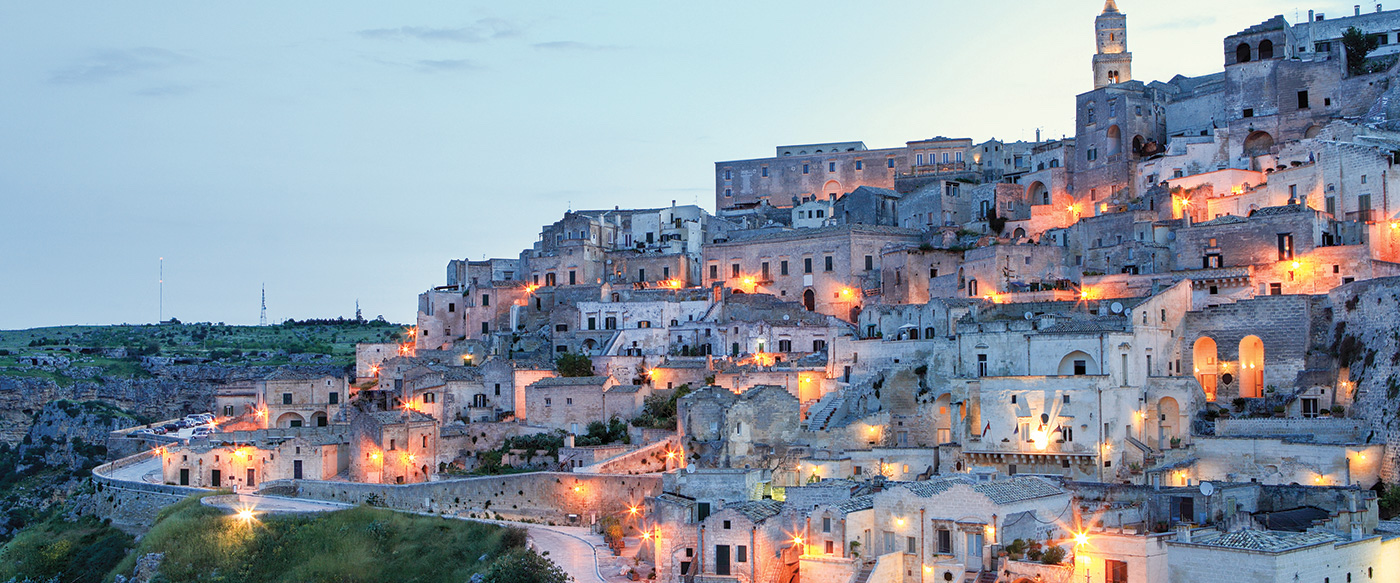
Tucked between Campania, Puglia, and Calabria, Basilicata is one of Italy’s most remote and underpopulated regions—a place of stark beauty, deep history, and dramatic landscapes. Much of the territory is mountainous, dominated by the Lucanian Apennines, including the extinct volcano Monte Vulture in the north. Though it has only a small stretch of coastline, Basilicata offers a unique blend of inland ruggedness and Mediterranean influence, with rocky hillsides, medieval hill towns, and sweeping views that seem untouched by time. The region’s cultural roots run deep, stretching back to pre-Roman Lucanian tribes, with significant Greek and Roman influence. Its most famous city, Matera, is a UNESCO World Heritage site renowned for its cave dwellings—the Sassi di Matera—and its ancient, almost biblical atmosphere.
Gastronomically, Basilicata is intensely rustic and resourceful, known for bold, earthy flavors and traditional techniques. Lamb, wild herbs, peperoni cruschi (dried sweet peppers), and robust sheep’s cheeses form the backbone of the local cuisine. This rugged culinary identity extends into its wines, which are defined by strength, austerity, and a deep connection to the land. For centuries, Basilicata remained on the fringes of Italian viticulture—isolated, undercapitalized, and overshadowed by its neighbours. Yet in this very obscurity lies its strength: authenticity, ancient vines, and untamed terroir, waiting to be rediscovered by a new generation of wine lovers.
Winemaking in Basilicata dates back to pre-Roman times, with evidence of viticulture linked to the Lucanians and later to the Greeks, who established colonies along the coast and introduced new grape varieties. Under the Roman Empire, viticulture flourished, particularly around Monte Vulture, where volcanic soils and altitude provided ideal growing conditions. The region’s wines were appreciated for their power and longevity, but after the empire’s fall, like much of southern Italy, Basilicata entered a long period of decline and relative isolation. Vineyards were largely maintained for subsistence and local markets, often interplanted in mixed-use agricultural systems.
In the 20th century, Basilicata remained peripheral to Italy’s modern wine revolution. Limited infrastructure, emigration, and economic hardship meant that viticulture remained traditional, often lacking in enological investment. However, from the 1970s onward, a small number of producers—most notably Paternoster and D’Angelo—began to elevate the profile of Aglianico del Vulture, a noble red grape capable of producing structured, age-worthy wines. The Aglianico del Vulture DOC was established in 1971, and by the early 2000s, a wave of new producers emerged, many working organically or biodynamically, to express the complexity and individuality of Basilicata’s volcanic terroir. Today, the region is still small in volume but rich in character, promise, and authenticity, with a growing reputation for producing some of southern Italy’s most serious red wines.
Basilicata’s defining geological feature is Monte Vulture, a long-extinct volcano whose rich, ash-laden soils give Aglianico its distinctive minerality, freshness, and longevity. Vineyards here sit at elevations between 400 and 700 meters above sea level, benefiting from diurnal temperature swings that preserve acidity and slow ripening. The soils are a complex mix of volcanic tuff, basalt, clay, and sand, allowing deep root systems and excellent drainage—ideal for low-yielding, old vines that produce concentrated fruit. Rainfall is moderate, and the cool evenings balance the hot southern sun, resulting in wines of structure and elegance.
Beyond Monte Vulture, the Alta Val d’Agri zone offers a higher-altitude, cooler climate with more limestone and marl, producing lighter, fresher reds and whites. The Matera area is more arid and sun-drenched, with clay and sandy soils that support early-ripening varieties and lend wines a warmer, broader profile. However, it is in Vulture that Basilicata’s terroir most dramatically asserts itself: the wines here carry a palpable sense of place, often showing volcanic dust, dried herbs, iron, and a smoky edge. Many vineyards are planted with old, ungrafted vines, some over 80 years old, which further concentrate the wines and enhance their connection to the land. This is a terroir of austerity and resilience, reflecting the rugged, timeworn beauty of the Lucanian landscape.
Basilicata is known for its red wines, most of which are made from Aglianico, in the Vulture area of the region. These wines can vary significantly in quality, but also in stylistically. Young, fruiter versions can be found, particularly through the co-operative cellars, as well as very structured, full-bodied wines requiring years to soften. Not that long ago, there was a small movement of producers experimenting with sparkling Aglianico, claiming this was the ‘real’, historical expression of the region. Fortunately, that trend hasn't really taken off.
It is possible to find wines produced from other varieties. Closer to the border with Puglia you'll find Primitivo and Syrah, even some Merlot. Basilicata's white wines are made primarily from Malvasia Bianca di Basilicata, one of the aromatic Malvasias. Study continues on this grape's DNA, but the wines are fairly pleasant. They can also be quite full-bodied, lacking in acidity (often due to region's hot summers) and very fragrant. The best are worth trying. There are also a few sweet passito wines made, from both Aglianico and Malvasia.
Aglianico is unquestionably the star of Basilicata and accounts for the majority of quality production. This thick-skinned, late-ripening red grape is ideally suited to the high altitudes and volcanic soils of Vulture. It produces wines of deep color, firm tannin, high acidity, and remarkable aging potential. Young Aglianico can be brooding and closed, but with time—both in barrel and bottle—it develops layers of cherry, plum, leather, black tea, and volcanic mineral character. It is often compared to Nebbiolo or Sangiovese in its ability to express terroir and evolve over decades.
Other grapes play minor roles but are growing in interest. In the Alta Val d’Agri, Merlot and Cabernet Sauvignon are often blended with Aglianico to produce more approachable styles, sometimes under Bordeaux-inspired frameworks. In Matera, red wines can include Sangiovese and Primitivo, while white wines may use Malvasia Bianca di Basilicata, Greco, or Fiano. Still, Basilicata remains one of the few Italian regions where the identity of the region is so tightly bound to a single grape. That said, many producers are now experimenting with rosato versions of Aglianico, as well as sparkling wines, leveraging the grape’s natural acidity and structure in new formats.
Basilicata has a limited number of appellations, but its most important by far is the Aglianico del Vulture DOC, which covers the northern slopes of Monte Vulture, an extinct volcano in the province of Potenza. Established in 1971, this appellation is dedicated exclusively to Aglianico, one of Italy’s most noble red varieties. The DOC covers both still and aged versions, with Aglianico del Vulture Superiore DOCG, granted in 2010, representing the top tier. Superiore wines must be aged for a minimum of three years, including one in wood, and come from the best-exposed, lowest-yielding vineyards. These wines show remarkable structure, freshness, and aging potential, often compared to Barolo or Taurasi.
Other designations in the region include Terre dell’Alta Val d’Agri DOC, located in the mountainous west near the border with Campania. This is a cooler, more alpine zone where international varieties like Merlot and Cabernet Sauvignon are allowed alongside Aglianico. Matera DOC, in the southeast near the namesake city, permits both reds and whites, including blends with Sangiovese, Primitivo, and Greco Bianco. However, these zones are small and still developing in terms of quality and recognition. Most of Basilicata’s wine identity is concentrated in Aglianico del Vulture, which continues to evolve through the work of ambitious winemakers who are exploring cru bottlings, organic viticulture, and minimalist cellar practices. IGT wines labeled Basilicata IGT also offer flexibility for experimental or non-traditional blends, including rosés and international varieties.
Basilicata is in the midst of a slow-burning revival, led by a core of producers who are combining traditional methodswith modern precision to unlock the potential of the region’s terroir. The dominant trend is a focus on single-vineyard Aglianico, with increasing attention paid to elevation, soil type, and microclimate. Many producers are releasing cru bottlings, aged in large Slavonian oak or used French barrels, which highlight site-specific characteristics while taming the grape’s natural austerity. There's also a rise in organic and biodynamic viticulture, particularly around Monte Vulture, where vines grow in relative isolation and pest pressure is low.
At the same time, Basilicata is cautiously branching out. Some producers are exploring white and rosé wines, often made from Greco, Fiano, or rosato-style Aglianico, to add stylistic diversity. There is a modest movement toward natural wine, including low-sulfur Aglianico and amphora-aged whites, though this remains niche. Internationally, Basilicata’s wines are gaining attention among critics and importers looking for authenticity, structure, and age-worthiness at fair prices. While the region still faces challenges—limited infrastructure, small production, and low name recognition—it also offers some of the most compelling red wines in southern Italy, rooted in place, history, and the quiet grandeur of volcanic soil.

