Sub-region
Lugana DOC produces structured, mineral white wines from the Turbiana grape on the southern shores of Lake Garda. Known for its tension, salinity, and ageing potential, Lugana balances freshness with quiet power. With rising international acclaim, it has become one of northern Italy’s most successful white wine appellations, offering both early-drinking charm and long-lived complexity.
4
29
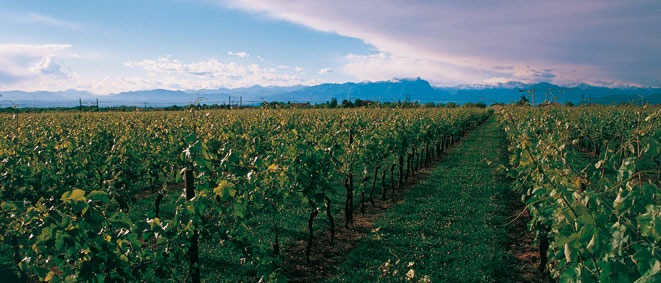
Lugana DOC spans the flat, glacial plains along the southern edge of Lake Garda, straddling the border between Lombardy and Veneto. Though compact in size, the zone is geographically and geologically distinct, defined by clay-rich soils and a temperate, lake-moderated climate. The wines are made exclusively from Turbiana, a native white grape historically confused with Trebbiano di Soave or Verdicchio.
Lugana has emerged as one of Italy’s most dynamic white wine regions. Its wines offer a distinctive mix of floral aromatics, saline tension, and textural grip, often with notable ageing potential. While many are consumed young, serious producers are elevating the style with late-harvest and riserva bottlings. Export demand has surged, particularly in Germany and the US, placing Lugana on the global wine map.
Viticulture around Lake Garda dates back to Roman times, with early mentions of white wines from the area appearing in medieval records. The name “Lugana” comes from lacus lucanus, referring to the marshy terrain once surrounding the lake. Historically, Lugana wines were rustic and made in small volumes, often for local consumption.
The modern Lugana DOC was established in 1967, making it one of Italy’s first white wine appellations. Its growth was driven by regional tourism and proximity to cities like Verona and Brescia. Quality improved significantly in the late 20th century with better vineyard management, clonal research, and a deeper understanding of Turbiana’s character.
Lugana’s vineyards sit on a glacial plain shaped by retreating Ice Age glaciers, resulting in deep, mineral-rich clay soilswith high moisture retention. These compact soils produce low vigour in the vine and low yields, encouraging concentrated, structured fruit. The vineyards lie at relatively low altitudes, between 60 and 120 metres above sea level. Lake Garda has a strong moderating effect on the local climate, reducing temperature extremes and encouraging a long, steady growing season. Morning mists and evening breezes contribute to gradual ripening, preserving acidity and aromatic complexity. The unique interplay of lake influence, clay soils, and sunlight results in wines that are both generous and finely structured, with a distinctive mineral character.
The Lugana DOC includes five officially recognised styles: Lugana, Lugana Superiore, Lugana Riserva, Lugana Vendemmia Tardiva, and Lugana Spumante. The core wine, labelled simply Lugana, is the most widely produced, fresh, un-oaked, and meant for early enjoyment. It must contain at least 90% Turbiana, though most are made entirely from the grape.
Lugana Superiore requires at least one year of ageing and tends to show more weight and structure. Riserva wines must be aged for at least 24 months, including six in bottle, and often reflect site and vintage character more clearly. Vendemmia Tardiva (late harvest) styles are rare but can be dry or off-dry, with ripe fruit and richness. Spumanteversions, made via Charmat or Metodo Classico, are also permitted under the DOC.
Standard Lugana wines are crisp, pale straw in colour, with delicate aromas of white flowers, citrus, almond, and herbs. On the palate, they are typically medium-bodied with notable acidity and a lightly saline, mineral finish. While accessible young, many improve with a few years in bottle, gaining texture and hints of stone fruit, honey, and smoke.
Superiore and Riserva bottlings have greater concentration, often showing leesy complexity, fine structure, and long finishes. Some producers use partial oak ageing or extended lees contact to enhance depth, though the wines generally remain fresh and linear. Late-harvest Lugana offers ripe orchard fruit and gentle sweetness, while Spumante Lugana tends toward subtle, elegant fizz rather than exuberance. Across all styles, the defining feature is the combination of clarity and mineral tension.
Lugana DOC wines must be made from a minimum of 90% Turbiana, a native grape genetically linked to Verdicchio but adapted to Lake Garda’s unique environment. Turbiana is low-yielding, moderately late-ripening, and naturally high in acidity, making it well suited for both early-drinking wines and age-worthy styles. In its youth, Turbiana offers citrus, green apple, and white floral notes. With age, it develops characteristics of almond, beeswax, chamomile, and smoky minerality. The remaining 10% of the blend (if used) may include authorised non-aromatic white grapes, though most quality producers use Turbiana exclusively to express varietal purity and regional identity.
Under the DOC regulations, Lugana wines must contain at least 90% Turbiana, with yields capped at 12 tonnes per hectare for the base wine. Superiore and Riserva styles require longer ageing, 12 and 24 months respectively, and slightly lower yields to encourage concentration. Minimum alcohol levels are 11.5% for standard Lugana and 12% for Superiore. All grapes must be grown within the designated DOC zone, which includes parts of Desenzano del Garda, Lonato, Pozzolengo, Sirmione (Lombardy), and Peschiera del Garda (Veneto). Wines must also be vinified and bottled within this area to carry the Lugana DOC designation.
Lugana is undergoing a quiet transformation from tourist wine to serious white wine territory. While the fresh, youthful style remains dominant, more producers are exploring site expression, low-intervention techniques, and longer ageing to demonstrate Turbiana’s full potential. Lees ageing, concrete fermentation, and restrained oak use are becoming more common in Superiore and Riserva bottlings. Single-vineyard expressions and limited-edition cuvées are also increasing, reflecting a desire to move beyond a monolithic image of Lugana. Exports are strong, particularly to Germany, Switzerland, and the United States. Sustainability is another growing focus, with many estates moving toward organic certification and biodiversity initiatives to protect the fragile lake-adjacent environment.
Ottella, a family-run estate, is recognised for terroir-driven cuvées with clarity and finesse. Zenato, though better known for Valpolicella reds, has long championed Lugana through precise, mineral wines and late-harvest expressions. Tommasi’s Le Fornaci project has brought additional attention to the region, while smaller producers like Tenuta Roveglia, Marangona, and Montonale are gaining acclaim for site-specific, low-intervention styles that reflect Lugana’s evolving identity.
Ca’ dei Frati is one of Lugana’s flagship producers, known for elevating the region’s profile with consistent, structured wines across all classifications. The ‘I Frati’ bottling is a good start for fresh Lugana, while ‘Brolettino’ shows the ageing potential of the Riserva style. Otherwise, Marangona Lugana Tre Campane or Montonale Orestilla offer single-vineyard expressions with texture and mineral detail. Zenato Riserva Sergio Lugana is a benchmark for longevity and depth. Ottella’s Molceo Lugana Superiore or Tenuta Roveglia Vigne di Catullo Riserva. For fizz, Ca’ Maiol’s Lugana Spumante offers a clean, elegant take on Metodo Charmat.

