Region
The island of Sardinia (Sardegna in Italian) is one of Italy's least talked about wine regions. There is a range of appellations grown there making excellent whites and reds.
13
49
Sardinia (Sardegna in Italian) is Italy’s second-largest island, floating in the center of the western Mediterranean between mainland Italy, Corsica, Tunisia, and the Balearic Islands. Isolated by sea and history, Sardinia has long cultivated a fiercely independent identity—culturally, linguistically, and agriculturally. Its landscapes are rugged and elemental: granite mountains, wild coastlines, sun-scorched plains, and windswept plateaus. Inland villages preserve ancient rituals, pastoral traditions, and a unique linguistic blend of Latin, Phoenician, and Catalan roots. From the Nuragic civilization to medieval Aragonese rule, Sardinia has been shaped by waves of conquest—but its culture remains defiantly its own.
Gastronomically, Sardinia is known for its simplicity and depth: roasted suckling pig (porceddu), pane carasau (thin crispbread), pecorino sardo, and bottarga (cured fish roe) are just a few iconic elements. Wine is woven into the island’s daily life and ceremonial fabric, often rustic in character but deeply expressive of its place. While historically overshadowed by mainland regions, Sardinia’s wines—like its people—are distinctive, intense, and resistant to outside categorization. The island’s windy, arid climate, old vines, and indigenous grape varieties make it uniquely suited for sustainable viticulture, and a new wave of producers is building on this legacy with precision, pride, and a growing international voice.
Sardinia’s winemaking tradition dates back at least 3,000 years, with evidence of viticulture from the Nuragic era, even before the Phoenicians and Carthaginians arrived. The Greeks, and later the Romans, contributed to the development of vineyards, but Sardinia’s relative isolation meant that viticulture evolved differently than on the mainland. Over centuries, Spanish and Catalan influences shaped both the local grape varieties and the winemaking culture—most notably through the introduction of Cannonau, which is genetically linked to Garnacha (Grenache), though it has developed a distinctive Sardinian expression.
In the 20th century, Sardinia’s wine industry was largely cooperative-based and aimed at bulk production, particularly for fortified wines and blends sent to the mainland. However, the late 20th century saw a dramatic shift, beginning with the recognition of Cannonau di Sardegna DOC in 1972 and continuing into the 1990s and 2000s with a push toward quality, terroir-driven wines. Visionary producers like Argiolas and Sella & Mosca helped redefine Sardinian wine by focusing on lower yields, clonal research, and better cellar practices. In recent years, the emergence of natural and artisanal producers, particularly in Mamoiada and Gallura, has further expanded Sardinia’s reputation, making it a rising star in Mediterranean wine.
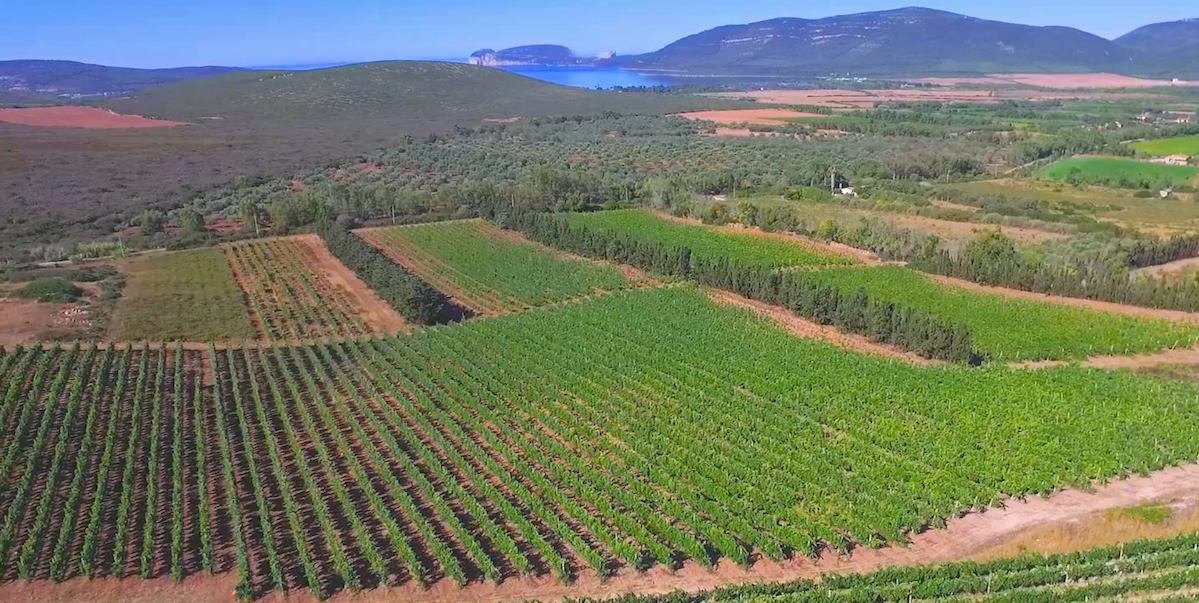
Sardinia’s terroir is defined by its extreme diversity, driven by geology, elevation, wind, and exposure. Much of the island is composed of granitic and schist soils, particularly in the northeast around Gallura, where poor, well-draining soils and high altitudes give Vermentino its clarity and mineral tension. The Mistral wind, blowing from the north, ventilates vineyards and reduces disease pressure, allowing for organic farming practices and preserving acidity even in hot conditions.
In the central highlands around Mamoiada and Nuoro, vineyards sit between 600 and 900 meters above sea level, planted primarily with old bush-trained Cannonau vines on decomposed granite and sandy soils. These conditions yield wines of remarkable freshness and structure, increasingly celebrated as the island’s “grand cru” zone for Cannonau. In the southwestern corner, the Sulcis region features sandy coastal soils ideal for ungrafted, phylloxera-free Carignano vines, many over a century old. These vineyards, often near sea level, benefit from saline air, sunlight, and breezes, producing supple, deeply flavored reds. The Campidano plain in the south is more fertile and suited for larger-scale production, while the central-western Oristano province is home to saline marshlands and clay soils that support the region’s oxidative wine traditions. The island’s terroir is as wild and elemental as its landscape, increasingly recognized as a powerful asset in defining Sardinia’s wine identity.
Sardinia’s viticultural strength lies in its suite of native and adapted varieties, many of which are found nowhere else in Italy. Among reds, the most important is Cannonau, the island’s name for Grenache. It is widely planted across Sardinia and produces wines that are robust, spicy, and earthy, but also capable of nuance and finesse when grown at altitude. In Mamoiada, Cannonau is often bottled as a single-vineyard wine with minimal intervention, expressing wild herbs, red berries, and stony minerality. Carignano, planted in the southwest, offers a darker, more structured profile—often with silky tannins, black fruit, and Mediterranean garrigue.
Monica, a softer red variety with ancient origins, is typically used for easy-drinking table wines, while Bovale Sardo and Bovale Grande contribute body and tannin to blends. Among whites, Vermentino dominates, producing both light, floral styles and more serious, textured wines in Gallura. Nuragus, likely of Phoenician origin, offers crisp, slightly salty whites ideal for aperitivo. Torbato, cultivated mostly by Sella & Mosca in Alghero, is a rare variety producing aromatic, structured whites with good aging potential. Malvasia di Bosa and Vernaccia di Oristano are used in Sardinia’s oxidative wines, aged in partially filled barrels under flor yeast, yielding complex nutty and saline profiles reminiscent of Jura vin jaune or dry Sherry. While international grapes like Merlot, Syrah, and Chardonnay are planted, Sardinia’s momentum is clearly behind its own varietal heritage.
Sardinia has one DOCG, Vermentino di Gallura DOCG, and over 15 DOCs covering a wide range of wines, from robust reds to crisp whites and fortified styles. Vermentino di Gallura, located in the northeastern province of Gallura, is the island’s most prestigious white wine designation, producing aromatic, saline, and structured wines from the Vermentino grape. The granitic soils and strong mistral winds of the area lend these wines both minerality and longevity. The DOCG requires a minimum of 95% Vermentino and permits both still and sparkling styles, with “Superiore” designations for higher alcohol and extract.
The Cannonau di Sardegna DOC is the most extensive, covering the entire island and allowing regional subzones such as Oliena, Jerzu, and Capo Ferrato. Wines must contain at least 85% Cannonau, yielding reds that range from bold and sun-drenched to lighter and more herbal, depending on terroir. Other key DOCs include Carignano del Sulcis DOC, in the sandy southwestern province of Sulcis-Iglesiente, known for elegant reds from Carignano (Carignan), and Monica di Sardegna DOC, producing softer, early-drinking reds from the Monica grape. Nuragus di Cagliari DOC focuses on a light, citrusy white from the ancient Nuragus grape, while Malvasia di Bosa DOC and Vernaccia di Oristano DOCpreserve Sardinia’s tradition of oxidative, sherry-like wines, aged under flor and rarely made today, but prized by connoisseurs. Many producers also label wines under Isola dei Nuraghi IGT, which allows more freedom for blends, experimentation, and international varieties.
The dominant trend in Sardinian wine today is a return to authenticity—a renewed focus on native varieties, old vines, and traditional methods. Producers in zones like Mamoiada, Dorgali, and Gallura are leading the way with minimal intervention winemaking, often working with organic or biodynamic principles. These wines emphasize transparency of site, low sulfur use, native fermentations, and bush-trained vines, particularly of Cannonau. This movement is also bolstered by growing local pride and generational turnover, with younger winemakers reclaiming abandoned vineyards and redefining Sardinian wine on their own terms.
At the same time, there is increasing international attention to Vermentino di Gallura, with producers pushing beyond the simple aromatic style toward age-worthy, textural expressions that showcase terroir. Interest in oxidative wines—especially Vernaccia di Oristano and Malvasia di Bosa—is small but growing, as connoisseurs and sommeliers seek out unique, old-school styles. The island’s natural advantages—sunlight, wind, and disease resistance—make it a leader in sustainable viticulture, and producers are leaning into this story. While Sardinia remains less known than Sicily or mainland regions, its wines are increasingly seen as underrated gems, prized for their purity, character, and connection to land and culture.
Sella & Mosca · 2023

